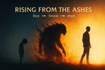

I did not start writing my memoir because I thought it would heal me. I started writing because the weight of silence finally became heavier than the truth I had been avoiding. What I did not expect was how the process itself would change me, not instantly, not cleanly, but in ways that reshaped how I understand pain, memory, and what it means to reclaim your own life.
Here is what I learned about healing while writing my story.
1. Healing Begins the Moment You Stop Lying to Yourself
For years, I told myself the past did not matter. That I was fine. That I had moved on.
But the page does not let you lie. Writing forced me to confront the parts of my story I had minimized, rationalized, or buried so deep I forgot they were still shaping me.
The truth was not just something I wrote, it was something I finally admitted.
And that admission was the first crack of light.
2. Memory Is Not Linear — It Is a Landscape
I expected memories to come back in order, like chapters. They did not.
They came back as:
-
flashes
-
sensations
-
smells
-
moments I did not know were still alive inside me
Writing taught me that memory is not a timeline, it is terrain. And healing means walking through it without running, numbing, or pretending the ground is solid when it is not.
3. You Cannot Heal What You Refuse to Name
There were scenes I did not want to write. Sentences I typed and deleted a dozen times. Moments I tried to soften because the truth felt too sharp.
But every time I avoided a detail, I felt it. My body knew. My story knew.
Naming the truth, clearly, without apology, became an act of liberation.
Not for the world. For me.
4. Healing Is Not Forgiveness — It Is Understanding
People love to talk about forgiveness as if it is the finish line. Writing taught me something different:
Healing is understanding the impact of what happened without letting it define who you are now.
Forgiveness may come. Or it may not.
But understanding, that is where the power is.
5. The Person I Was Then Deserved Compassion, Not Judgment
Writing about my younger self was the hardest part. Not because of what happened to him, but because of how I had treated him for years.
I blamed him. I judged him. I held him responsible for surviving the only way he knew how.
But the more I wrote, the more I saw him clearly: a boy doing everything he could to stay alive in a world that failed him.
Healing came when I stopped punishing him and started protecting him.
6. Healing Is Not a Destination — It Is a Relationship
Writing a memoir does not “fix” you. It does not erase the past. It does not magically close every wound.
But it does change your relationship with your story.
It gives you:
-
language
-
clarity
-
perspective
-
ownership
Healing became less about “getting over it” and more about learning to live with truth instead of fear.
7. Telling the Truth Creates Space for Others to Breathe
I did not expect anyone to relate to my story. I did not expect messages from strangers. I did not expect people to say, “I thought I was the only one.”
But that is the thing about truth: when you speak it, you give others permission to speak theirs.
Healing is contagious.
8. Writing Did Not Save Me — It Returned Me to Myself
In the end, the greatest lesson was this:
I did not write my memoir to become someone new. I wrote it to remember who I was before the world tried to rewrite me.
Healing was not the reward. It was the return.

Add comment
Comments